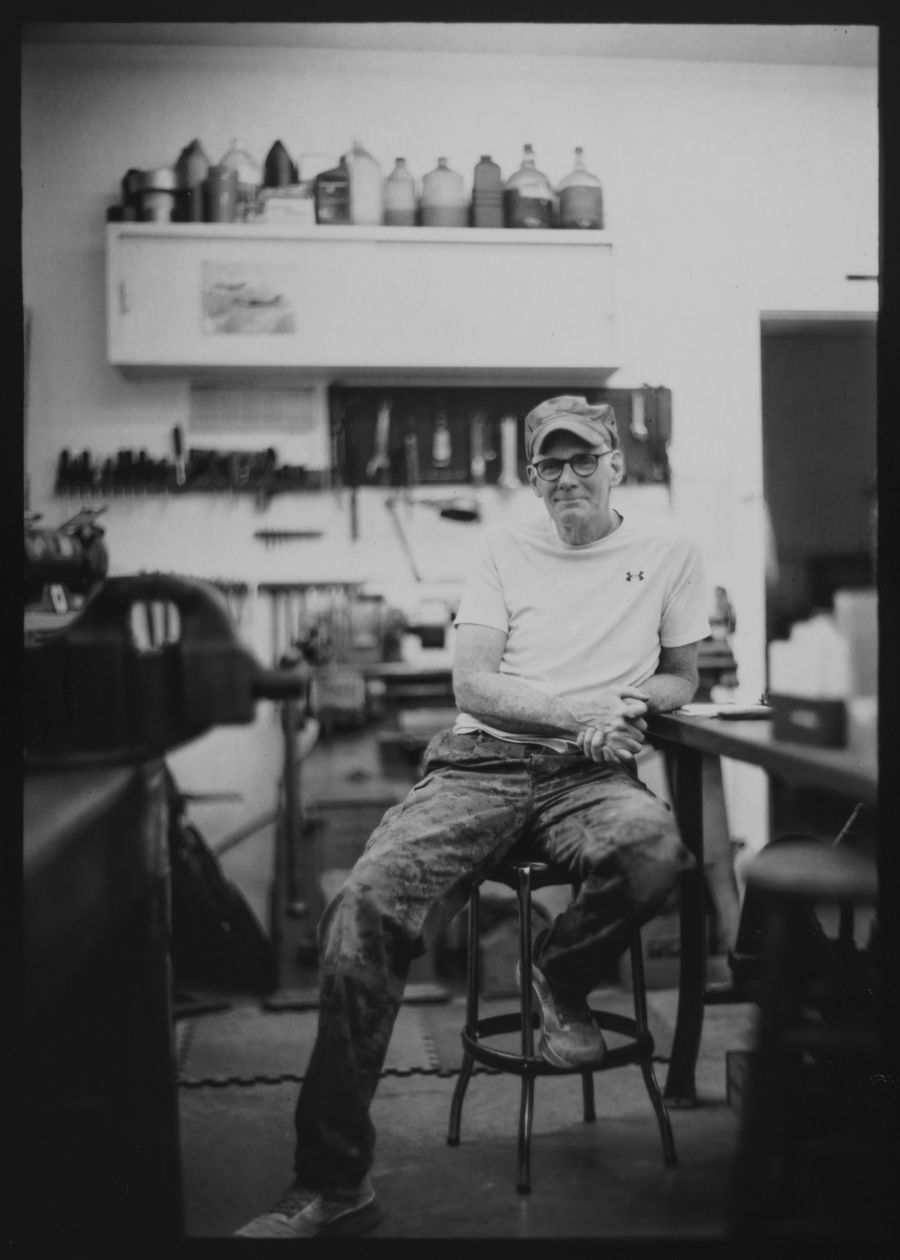
Sam Brown
Photographer and camera builder
Banner Elk, North Carolina

I build cameras by hand and make portraits with them.
I build cameras by hand in Banner Elk, North Carolina. The big one is a trailer. The small one is about the size of a suitcase. I take them to schools and festivals and anywhere else somebody wants to see how a photograph actually gets made. My programming is flexible to class sizes, accommodating infrastructure and weather conditions.
Sam Brown’s Giant Camera
A camera you can walk inside.
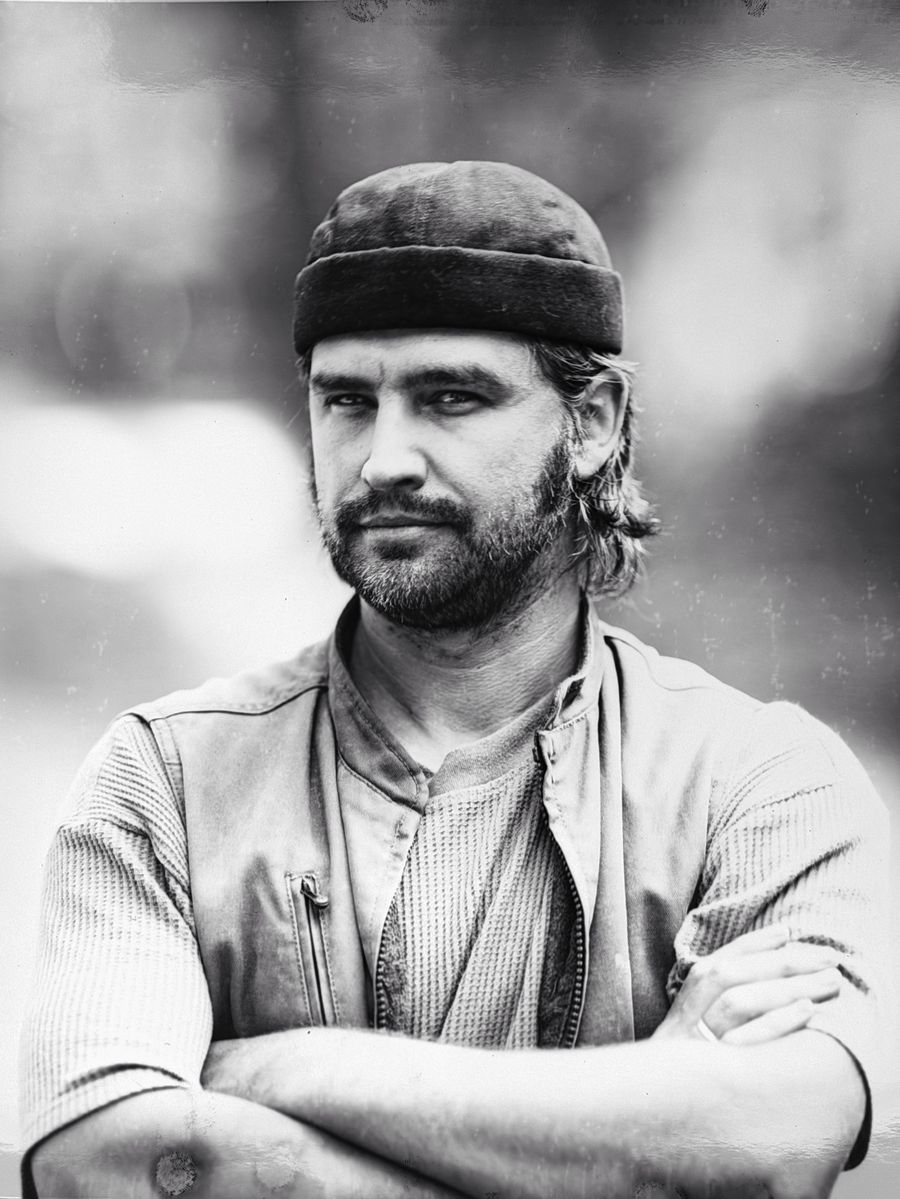
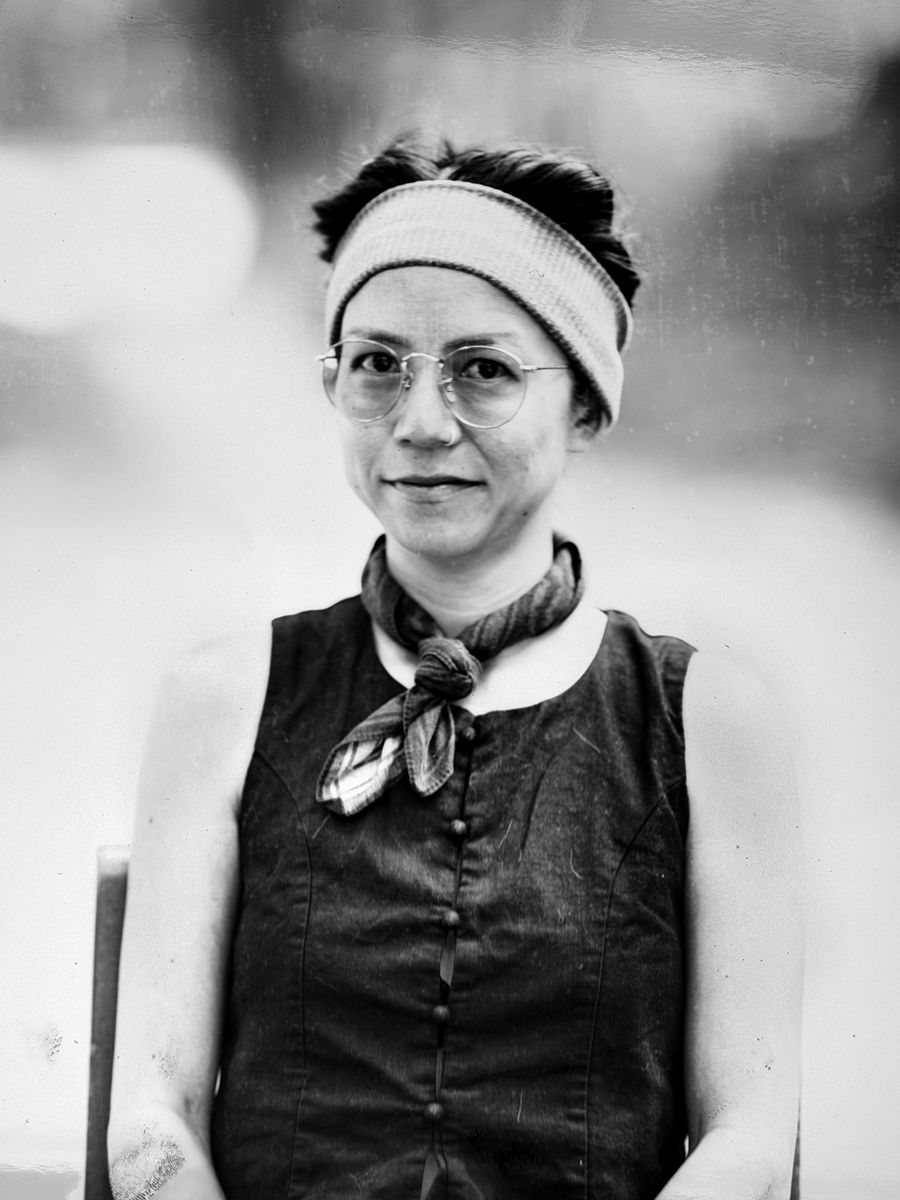
Sam Brown’s Giant Camera is a six-by-twelve enclosed cargo trailer with a lens set into the side wall. The whole trailer is the camera. It’s also the darkroom. It produces silver gelatin photographs up to three by four feet. I started building the camera in 2023 and finished it in 2026 with help from an Artist Support Grant from the Toe River Arts Council.


The process
Once the camera is set up, I focus the subject onto the large screen inside the trailer, then a piece of photographic paper is fixed onto the screen and the exposure is made. After the exposure, the paper is immersed in two chemical baths; one to develop the image, and one to ‘fix’ it to make it permanent. The produced image is a negative. The negative is then washed in water. After washing, the negative is sandwiched with a fresh sheet of blank paper onto the screen and exposed to light. The blank paper is then developed, fixed, and washed. The product is a finished, large format print.
That’s more or less how Fox Talbot did it in the 1840s. Seeing it happen in front of you is a magical experience.


The Appalachian Box Camera
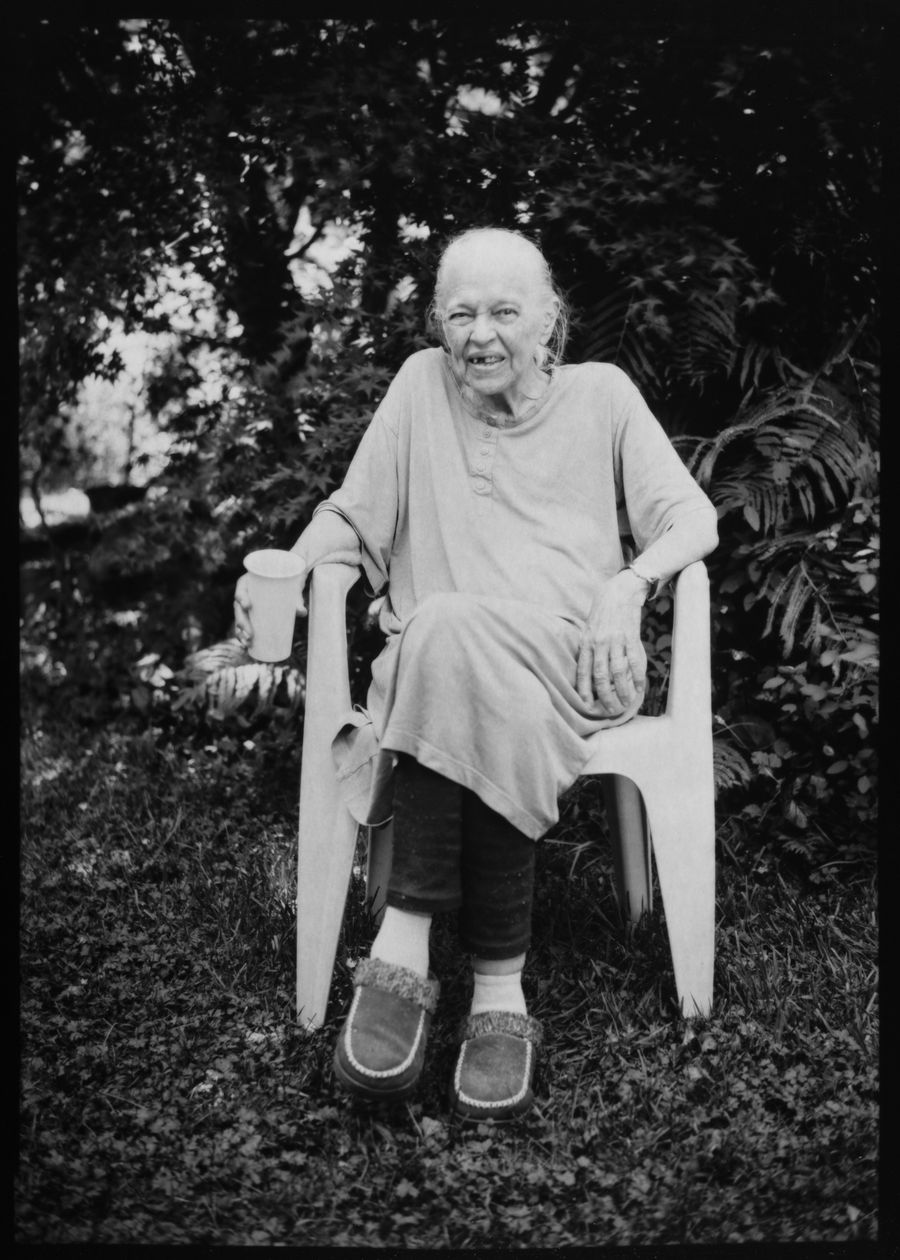
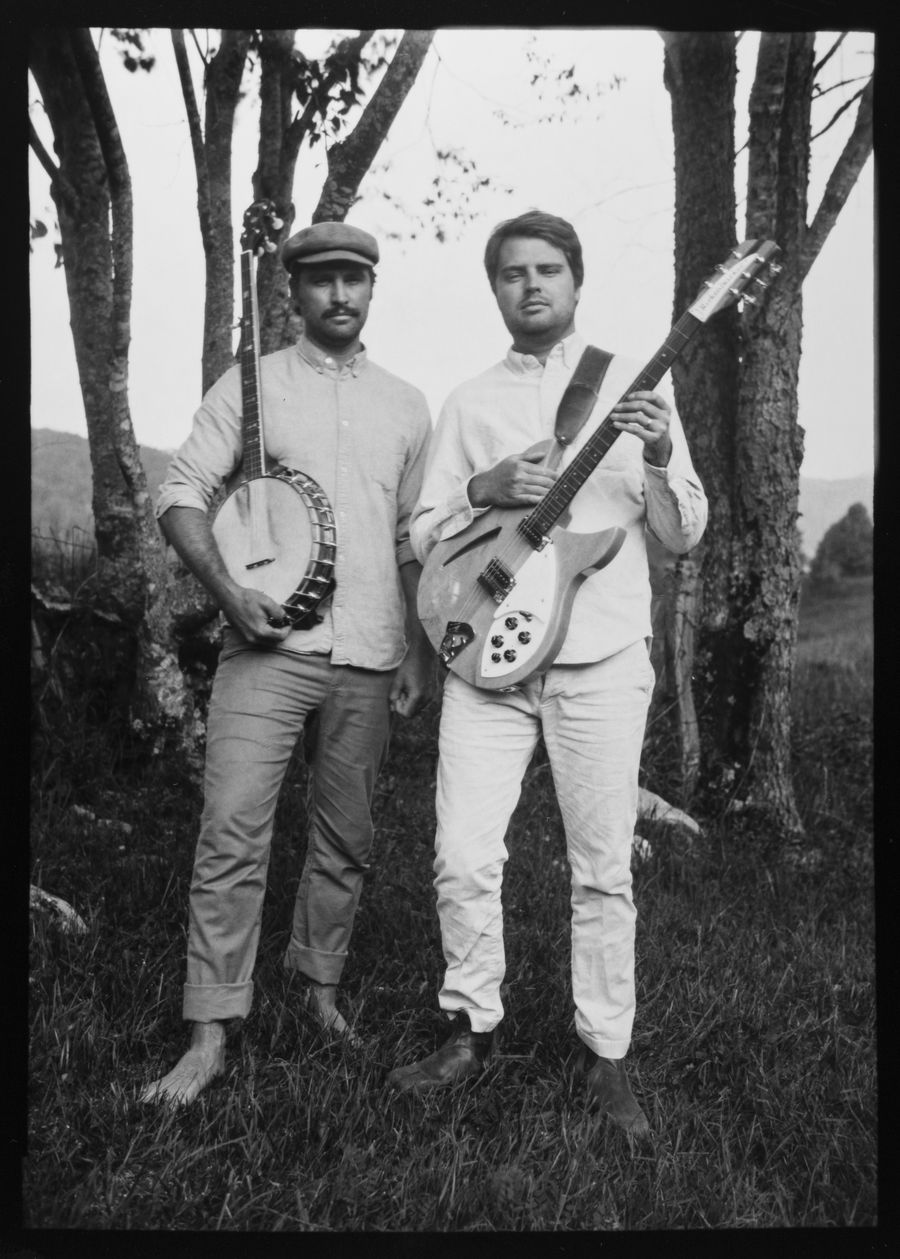
The Box Camera is the same concept as Sam Brown’s Giant Camera, just in a smaller form. Built in 2020, it’s my version of the kamra-e-faoree, the wooden box camera that street photographers in Afghanistan worked with for most of the last century.
Perfect for a rainy day, indoor settings, or where infrastructure for the giant camera is not readily available, the Appalachian Box Camera sets up on a tripod and runs on the same process. It produces 5×7″ prints.

For schools
The camera does most of the teaching. Kids go inside it, see the picture land on the wall, and depending on the age of the students, help make the prints. The prints are my gift to the school.
What a visit looks like
- The camera arrives and students see the lens and the trailer before anything else happens.
- They go inside, into the dark, and the image appears on the wall upside down.
- They set up the picture and can make the exposure themselves.
- They watch the print come up in the developer tray.
- The school keeps the finished portrait.
Connections to the classroom
- Physical science
- Light, reflection and refraction, real images, focal length and aperture, at a scale students can stand inside.
- Geometry
- The camera is a similar-triangles machine. Students can measure, predict how large the image will be, and then check their answer against the wall.
- Chemistry
- Silver halide reduction, start to finish, in about ninety seconds. Fixing is a second reaction they can watch clear the paper. Alternative chemistry processes are available. Developer can be made from household ingredients like instant coffee, washing soda and vitamin C.
- Math
- Exposure is a base-two system. Every stop doubles or halves the light, which makes exponential reasoning physical.
- North Carolina history
- Conversations about the history of photography in North Carolina include who could afford to have a portrait made and who could not, how this region has mostly been photographed by people from somewhere else, and the impact photography can have on the image of a community.
Logistics
- Sam Brown’s Giant Camera needs a level surface lot or parking space. The trailer is 16 feet long including the tongue, 6 feet wide, and 9 feet tall. One standard 120V outlet. About an hour to set up and an hour to break down.
- The Appalachian Box Camera works in a classroom, a library, a gym, or outdoors, and needs nothing special.
- Insurance. I carry general liability including abuse and molestation coverage, and can provide a certificate naming the school or district as additional insured.
- Format. A half day, a full day, or a multi-day residency that ends in a collaborative portrait the school keeps and hangs.
School rates
- Classroom or library visit, Box Camera. $350. About ninety minutes with one class or club. I set up, make a few portraits, and the kids see the whole thing start to finish.
- Half day, Giant Camera. $650. The trailer on site for a morning or an afternoon. Three or four classes come through according to the bell schedule. Students get to see the workings of the camera and class portraits are made. Final prints are made and delivered after the date.
- Full day, Giant Camera. $1,200. Most of the school gets to come through. If there’s an art class or a photo class that can stay longer in the afternoon, they can help make the final prints which are produced before the end of the day. This is a good opportunity for an entire student body group portrait.
- Multi-day residency. From $3,500. Same group of students over several days. They plan the picture, learn the steps, make the exposures, and see the final print get made. By the end of the residency, students are helping in all steps of the process.
- Travel is included within about an hour of Banner Elk. Past that I’ll quote it with the date.
About me
I’m a self-taught photographer raised in Avery County. I started making photographs in 2005 and building cameras in 2020. I believe that every child deserves physical photographs of themselves, and hope to inspire young minds to dream big and build their own future, with the help of and in service to their community.